Sodium carbonate (Soda ash Washing soda Soda crystals)
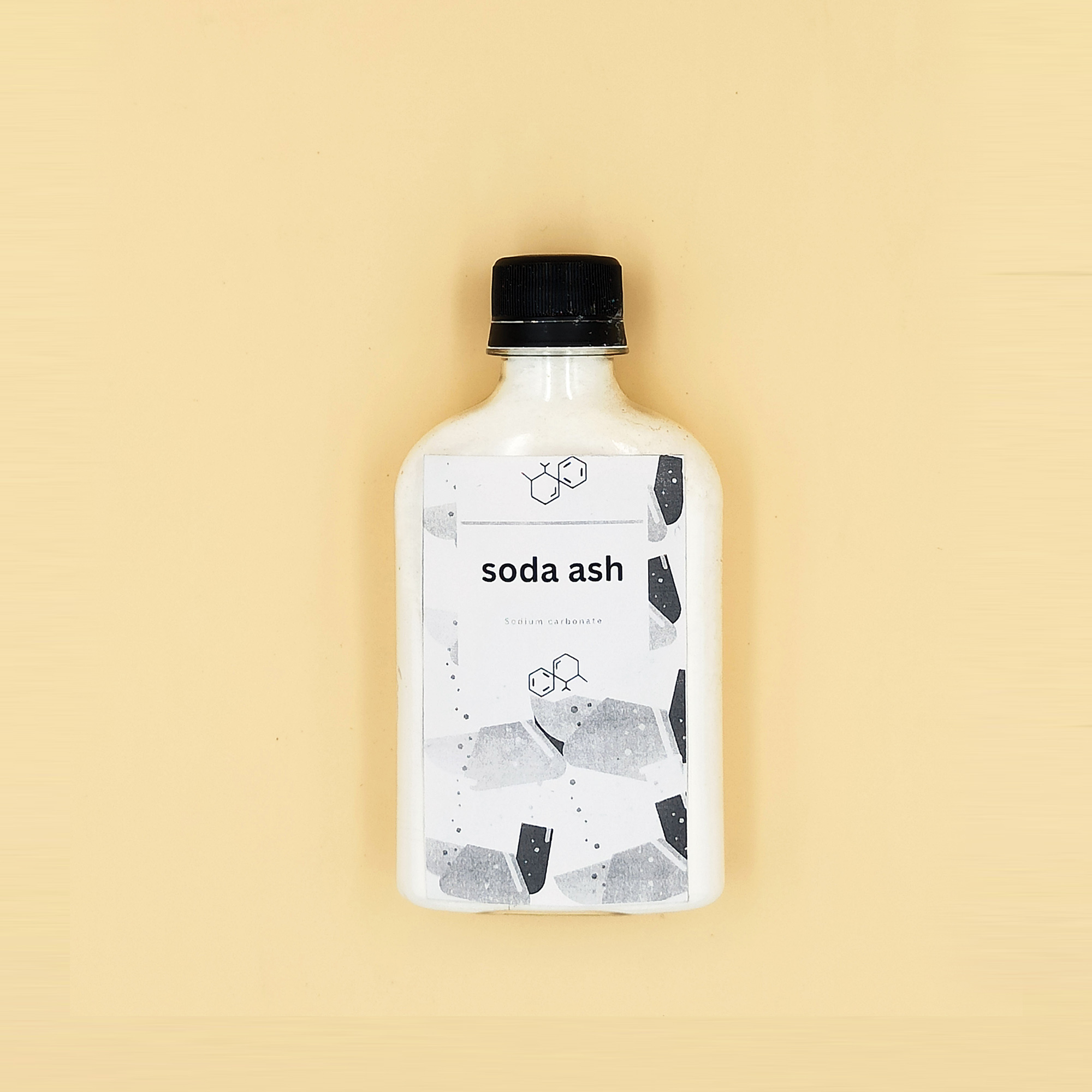
Sodium carbonate is an inorganic chemical compound. Sodium carbonate is commonly known as soda ash. Sodium carbonate is one of the most important basic chemicals. Its big advantage over sodium hydroxide is that it is non-corrosive, so it is safer to transport. Sodium carbonate is used in two types, light and heavy
Synonyms of sodium carbonate:
Disodium carbonate / Soda ash / Disodium salt of carbonic acid
Chemical safety:
irritating
Physical characteristics of sodium carbonate
- The chemical formula of sodium carbonate is Na2CO3.nH2O, where n can be 0, 1 or 10
- The molecular mass of sodium carbonate is 105.988 g/mol
- The appearance characteristics of sodium carbonate are colorless or white crystals, white or colorless powder
- The boiling point of soda decomposes due to heat and releases carbon dioxide gas
- The melting point of disodium carbonate is 851 degrees Celsius
- The chemical safety of this substance is irritating
Sodium carbonate is known by the brand name of soda ash
Definition of sodium carbonate:
Sodium carbonate is an inorganic chemical compound. Sodium carbonate is commonly known as soda ash. Sodium carbonate is one of the most important basic chemicals. Its big advantage over sodium hydroxide is that it is non-corrosive, so it is safer to transport. Sodium carbonate is used in two types, light and heavy
The difference between light and heavy sodium carbonate:
The only difference between light and heavy sodium carbonate is the density and size of their crystals. Chemically, there is no difference in their molecular structure and they are the same. and have different physical properties. Light sodium carbonate is a fine white powder and is used in the oil and gas industry for water purification, and its density is half that of heavy sodium carbonate. Heavy sodium carbonate is used in the chemical industry
Applications of sodium carbonate
The most common applications of heavy sodium carbonate are in making tiles, ceramics and glass. It is also used in the manufacture of other chemicals, soaps, detergents and food and pharmaceutical industries. Sodium carbonate has cleaning and emulsifying properties and helps to dissolve the detergent and prevent sedimentation. This substance is used in the preparation of soaps, dishwashing liquid and laundry powders to create more foam and remove stains. Also, in the production of toothpaste, it increases the quality of cleaning and scaling, and it is also used to adjust the pH of shampoo. It is also used in dyeing, textile and leather industries
packing : Sodium carbonate is supplied in two forms: jhanbo and 50 kg ba
-
Acetic Acid and the Role of Saba Shimi Mehr in Chemical Industries
Acetic acid (CH3COOH) is one of the most critical chemical compounds in the industry. Due to its unique properties, it is utilized across diverse sectors ranging from food production to pharmaceuticals. Known commonly as ethanoic acid, this weak acid is recognized as a fundamental building block in the synthesis of organic compounds. In Iran, leading companies such as Saba Shimi Mehr play a key role in meeting domestic industrial demands by focusing on the production and distribution of high-quality chemicals. By leveraging modern technologies, this company produces and supplies acetic acid in accordance with global standards.
-
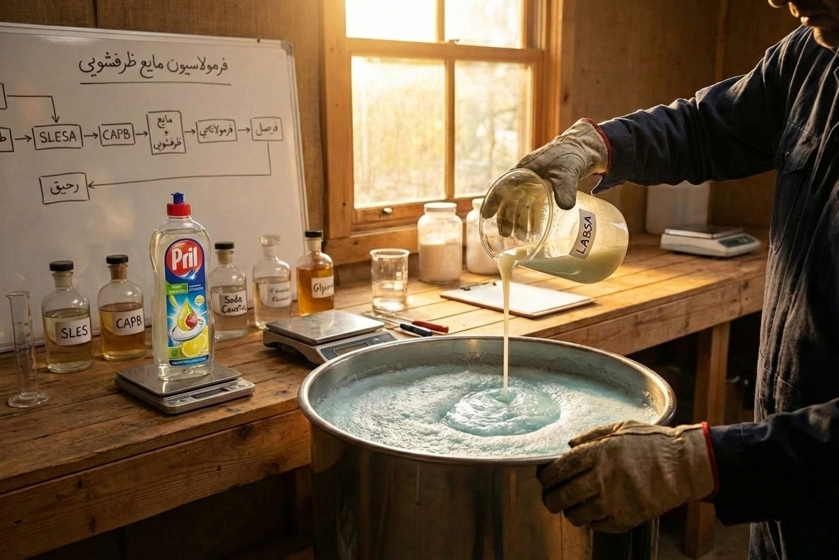
how to make dish washer
The materials needed to make the dishwashing liquid formulation are: linear alkylbenzene sulfonic acid (LABSA), sodium hydroxide (caustic soda), cocoamidopropyl betaine (CAPB), coconut diethanolamide (CDEA), sodium lauryl ether sulfate (SLES), Sodium Lauryl Sulfate (SLES), Propylene Glycol, Glycerin, Color, Fragrance and Water.
-
how to make hair shampoo
Do you want to produce shampoo for a specific type of hair? Oily hair, dry hair, dandruff, etc.? While essentially the same formula is required to produce all of the above products, you can add and modify specific ingredients for specific markets. The AustraLab program includes many shampoos, conditioners, styling aids and finished product formulas that you can tweak to create endless combinations. You can start your own profitable business as a private label hair care manufacturer or make conditioners and shampoos for your salon.
-
how to make toilet liquid
Commercial and economic grade liquid soap formulation The ingredients required to make the liquid toilet soap formulation are: water, sodium lauryl ether sulfate (70%), sodium lauryl sulfate, softener, foam enhancer, skin softener, vitamin E, glycerin acid, glycerin, glycerin, glycerin, Glycerin, glycerin and fatty acids, fragrance