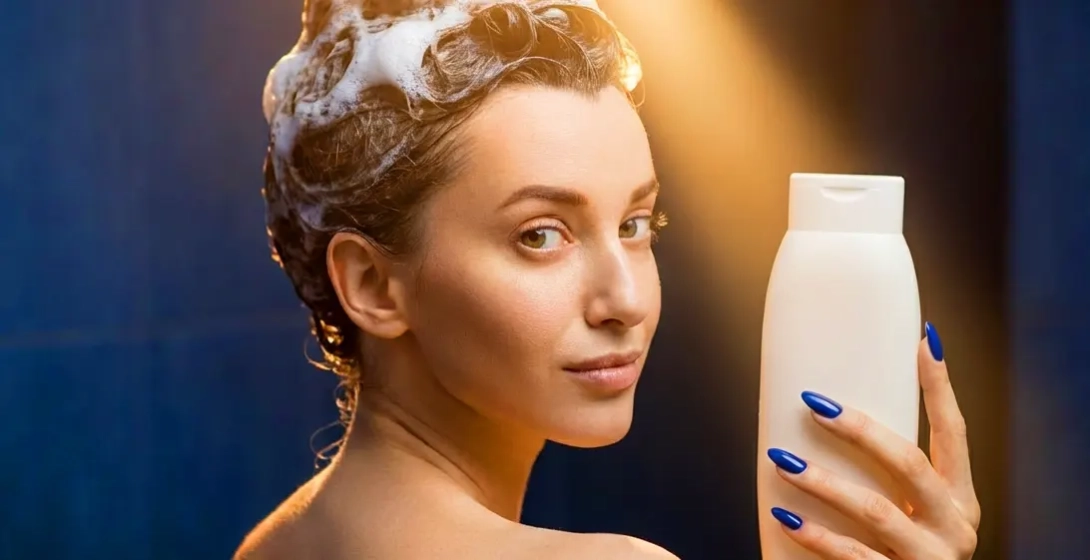
how to make hair shampoo
Do you want to produce shampoo for a specific type of hair? Oily hair, dry hair, dandruff, etc.? While essentially the same formula is required to produce all of the above products, you can add and modify specific ingredients for specific markets. The AustraLab program includes many shampoos, conditioners, styling aids and finished product formulas that you can tweak to create endless combinations. You can start your own profitable business as a private label hair care manufacturer or make conditioners and shampoos for your salon.
How to make shampoo?
In fact, one of the simplest hair care products is shampoo.
Because most shampoo formulas are up to 80 percent water, profit margins can easily reach 1,000 percent. You can produce hair care for countless markets - from salons to... as a private label hair care manufacturer.
What ingredients do you need to make shampoo?
To determine this, you need to determine the purpose of the products - do you know how to make a dress for babies, men, women, or wholesale for salons? Or even for pets?
Can you produce a shampoo for a specific type of hair? Dry, greasy, dry, dandruff, etc.?
While you need the same formula to make all of the above products, you can add and change specific ingredients for specific markets. The AustraLab program includes many shampoos, conditioners, styling aids and finished product formulas that can be tweaked to create endless combinations.
You can earn and work for profit as a start-up label hair care manufacturer or make conditioners and shampoos for your salon.
What are the main ingredients of shampoo?
What he can see is that the way shampoos and conditioners are made is partly an illusionary art - many ingredients are needed for the product to work, but they add to the users' experience and feel as they make them, giving them a sense of luxury. So the active ingredients that are effective in the shampoo make up only a very small part of the final product.
Water
This main ingredient is present in all shampoo recipes and makes up about 60-80% of the solution. In addition to being cheap, it helps to dilute the cleanser, thereby reducing skin movement and making the shampoo formula spread more easily on the hair and scalp. You'll see it grouped on the product label as "aqua" or "acqua" - somehow, many manufacturers think this term makes "aqua" sound more expensive or more interesting than it is.
Surfactants (surface active substances – or cleaning agents).
These are the basic ingredients of the cleansing shampoo, making up about 10-15% of the formula. Similar to emulsifiers, these can mix water and oil.
There are two types of surfactants - primary and secondary.
The main surfactants include sulfates and sulfates (eg, alkyl sulfonates, sodium lauryl sulfate). Their main purpose is to clean and foam.
Secondary surfactants, as well as adding cleansing and foaming properties to the shampoo formula, help reduce movement and drying. These shampoo ingredients include betaines and sulfosuccinates (eg, coco betaine, polyglucose). If you want to make a shampoo formula for oily and mature sebum, you need to use a higher surfactant. If you want to make baby shampoo, use only mild and low secondary surfactants. Professional quality shampoos do not use ingredients like castile soap.
Thickeners or viscosifiers
This basically means how to make the shampoo thick and creamy. While thick doesn't actually clean the hair to eat shampoo, customers equate thickness with "richness." Watery shampoos work well for all hair types, but are significantly more popular with consumer consumers. These shampoos, which are also used as viscosity builders, contain salt and gum (guar gum, gum xanthan, cellulose). They usually make up between 2-5% of the formulation. Gums improve viscosity due to their gel-like properties, however they have the added advantage of being able to act as a foam stabilizer and suspending agent to keep insoluble particles in suspension. For example, I can mention zinc pyrithione, which is one of the most widely used anti-dandruff shampoo ingredients.
Conditioning agents
To neutralize surfactants, most shampoo recipes include emollients to help smooth, soften, and detangle hair. The ingredients that make up about 1% of the formulation include quaternary compounds (quats) that have a positive effect to neutralize static in the hair from damaged hair with a negative charge. Coats also have agents that improve combing and create shine. Examples of conditioning agents specifically used in shampoo formulations include quaternium 80 and 87, plus the polymer guar hydroxypropyltrimonium chloride, and a silicone known as dimethicone. Conditioning ingredients usually make up no more than 1% of the shampoo formula. When you remember how to make styling, detangling, and smoothing products, find these components in the software list.
Foam booster
Most of the consumers do not like the non-foaming shampoo formula and think that these shampoos do not lather. Technically, this is completely false, which is why you'll always find lather boosters listed in shampoo ingredients. Viscosity instruments, foam boosters also give the product a sense of richness and luxury. These are also a type of surfactant, usually containing betaine or alkanolamides, which help with foam volume and bubbles. Foam boosters may comprise 1-2% of the formulation and include sarcosinate, lactylate, loramide DEA, cocomidopropyl betaine.
-
Acetic Acid and the Role of Saba Shimi Mehr in Chemical Industries
Acetic acid (CH3COOH) is one of the most critical chemical compounds in the industry. Due to its unique properties, it is utilized across diverse sectors ranging from food production to pharmaceuticals. Known commonly as ethanoic acid, this weak acid is recognized as a fundamental building block in the synthesis of organic compounds. In Iran, leading companies such as Saba Shimi Mehr play a key role in meeting domestic industrial demands by focusing on the production and distribution of high-quality chemicals. By leveraging modern technologies, this company produces and supplies acetic acid in accordance with global standards.
-
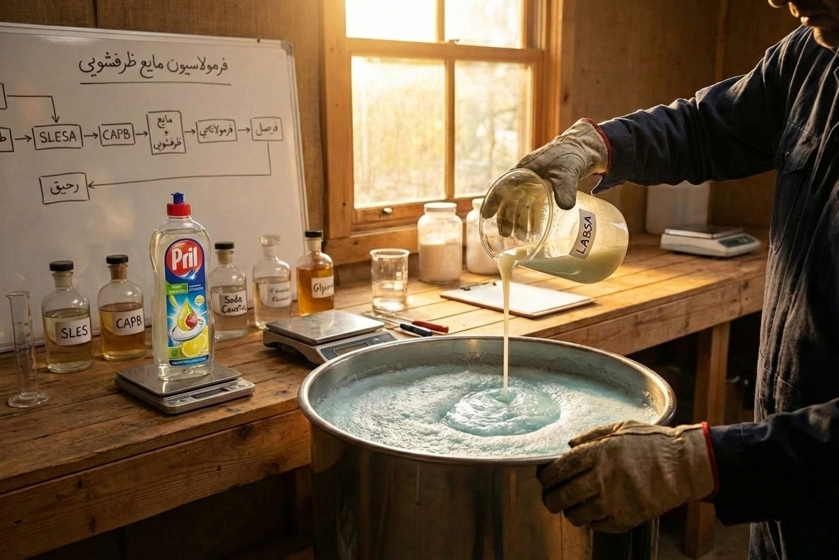
how to make dish washer
The materials needed to make the dishwashing liquid formulation are: linear alkylbenzene sulfonic acid (LABSA), sodium hydroxide (caustic soda), cocoamidopropyl betaine (CAPB), coconut diethanolamide (CDEA), sodium lauryl ether sulfate (SLES), Sodium Lauryl Sulfate (SLES), Propylene Glycol, Glycerin, Color, Fragrance and Water.
-
how to make hair shampoo
Do you want to produce shampoo for a specific type of hair? Oily hair, dry hair, dandruff, etc.? While essentially the same formula is required to produce all of the above products, you can add and modify specific ingredients for specific markets. The AustraLab program includes many shampoos, conditioners, styling aids and finished product formulas that you can tweak to create endless combinations. You can start your own profitable business as a private label hair care manufacturer or make conditioners and shampoos for your salon.
-
how to make toilet liquid
Commercial and economic grade liquid soap formulation The ingredients required to make the liquid toilet soap formulation are: water, sodium lauryl ether sulfate (70%), sodium lauryl sulfate, softener, foam enhancer, skin softener, vitamin E, glycerin acid, glycerin, glycerin, glycerin, Glycerin, glycerin and fatty acids, fragrance