Sodium Carbonate | What is Sodium Carbonate?
Sodium Carbonate, with the chemical formula Na2CO3, is one of the most vital chemical compounds used across various industries. Also known as Soda Ash, this substance plays a key role in manufacturing a wide range of products, from glass and detergents to water treatment processes. This article explores the properties, production methods, applications, and industrial importance of sodium carbonate, while analyzing the role of Saba Shimi Mehr as a leading supplier of this material in Iran.
What is Sodium Carbonate?
Sodium Carbonate is the sodium salt of carbonic acid. It appears as a white, odorless, and hygroscopic (moisture-absorbing) powder. When dissolved in water, it produces an alkaline solution, making it a frequent choice for pH regulation in chemical processes.
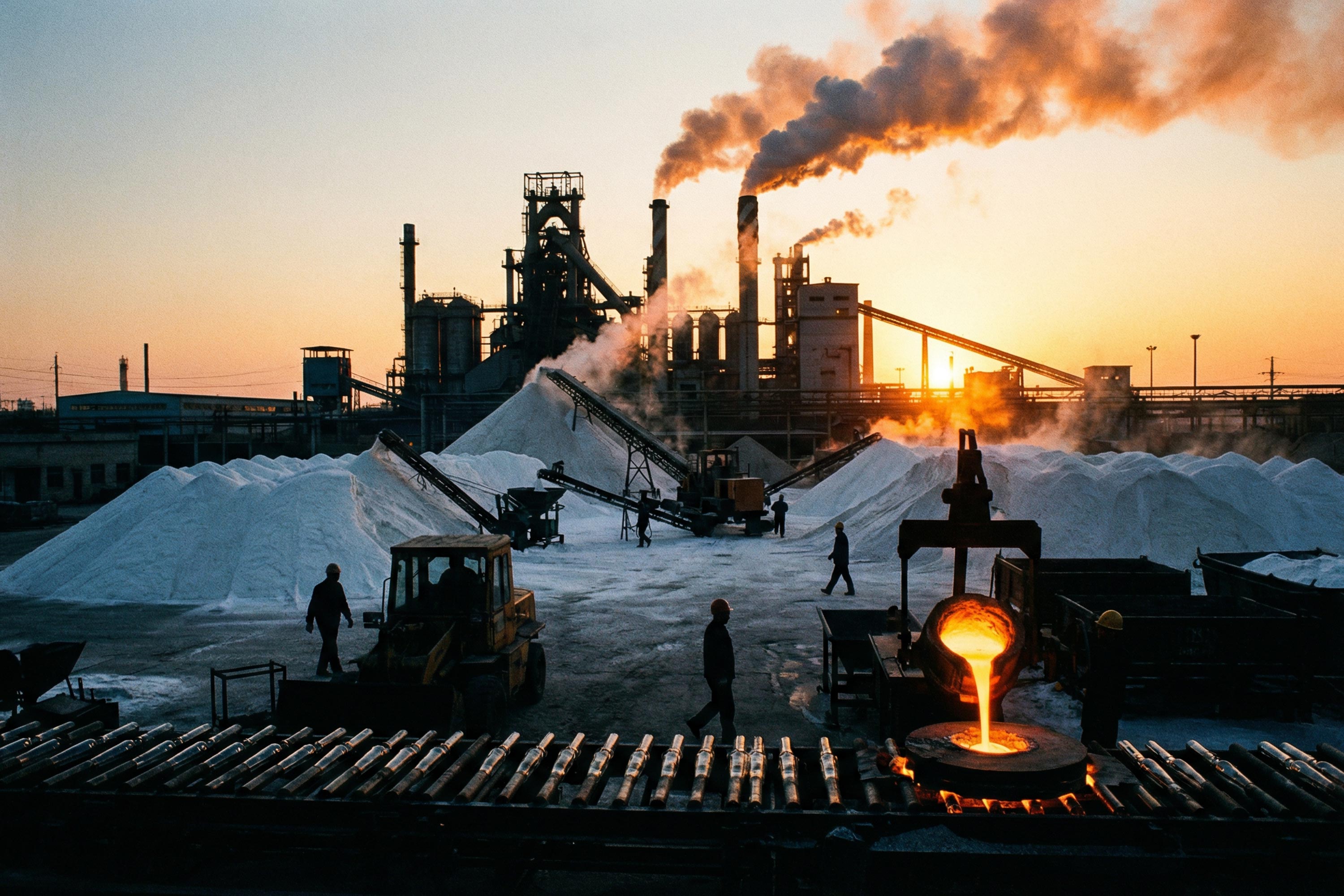
Natural sources of sodium carbonate include salt lakes and mineral deposits formed by the evaporation of sodium-rich waters. However, the vast majority of the world's supply today is produced through industrial methods, most notably the Solvay process.
Production Methods
Before the 19th century, sodium carbonate was primarily obtained by burning seaweed or mining natural deposits. As industrial demand grew, modern methods took over.
The Solvay Process
Invented in 1861 by the Belgian chemist Ernest Solvay, this remains the primary industrial method for producing soda ash. The process utilizes table salt (NaCl) and limestone (CaCO3) as raw materials. The complex chemical reactions involved yield high-purity sodium carbonate at a relatively low cost.

Saba Shimi Mehr, utilizing modern technologies and the expertise of domestic specialists, has secured a prominent position in the Iranian market. By adhering to international environmental standards, the company provides products that meet the rigorous demands of advanced industries.
Wide-Ranging Applications
Due to its unique chemical properties, sodium carbonate is indispensable in several sectors:
- Glass Industry: Approximately 50% of the world's sodium carbonate is used in glass manufacturing. It acts as a flux, lowering the melting point of silica to facilitate the production process.
- Detergents: It serves as a water softener in laundry powders and household cleaners, helping to remove stains more effectively.
- Food Industry: Used as an acidity regulator in products like bread, crackers, and biscuits.
- Water Treatment: Highly effective in removing Ca2+ and Mg2+ ions from hard water.
- Chemical Industry: Acts as a primary feedstock for producing compounds such as Sodium Bicarbonate (Baking Soda).
Saba Shimi Mehr supplies sodium carbonate in various grades—Industrial, Food, and Pharmaceutical—allowing domestic industries to integrate these products into their supply chains with complete confidence in quality.
Sodium Carbonate and the Environment
While highly useful, the production of sodium carbonate presents environmental challenges, including greenhouse gas emissions and high energy consumption during the Solvay process. Modern manufacturers are increasingly shifting toward "Green Chemistry," such as recycling CO2 within the production cycle.
Saba Shimi Mehr has taken significant steps toward reducing its carbon footprint by implementing waste management systems and optimizing energy consumption. By obtaining international environmental certifications, the company serves as a model for balancing industrial growth with social responsibility.
The Role of Saba Shimi Mehr in National Industrial Development
In recent years, achieving self-sufficiency in strategic chemicals has been a major goal for Iran. By investing in advanced production lines and training specialized personnel, Saba Shimi Mehr has significantly reduced the country's reliance on imports.
The company not only meets domestic demand but also plays an active role in Iran's economic growth through exports to neighboring countries. One of their most forward-thinking projects involves developing "Green Soda Ash" production units powered by renewable energy, which represents a major transformation in the regional chemical industry.
Conclusion
Sodium carbonate is a fundamental industrial building block with an undeniable role in modern life. From glass skyscrapers to the cleanliness of our clothes, the footprint of this simple yet vital compound is everywhere. The efforts of producers like Saba Shimi Mehr, who contribute to national progress through innovation and responsibility, are invaluable. As global demand rises, Iranian companies are well-positioned to expand their share of international markets by focusing on quality and sustainability.
-
Acetic Acid and the Role of Saba Shimi Mehr in Chemical Industries
Acetic acid (CH3COOH) is one of the most critical chemical compounds in the industry. Due to its unique properties, it is utilized across diverse sectors ranging from food production to pharmaceuticals. Known commonly as ethanoic acid, this weak acid is recognized as a fundamental building block in the synthesis of organic compounds. In Iran, leading companies such as Saba Shimi Mehr play a key role in meeting domestic industrial demands by focusing on the production and distribution of high-quality chemicals. By leveraging modern technologies, this company produces and supplies acetic acid in accordance with global standards.
-
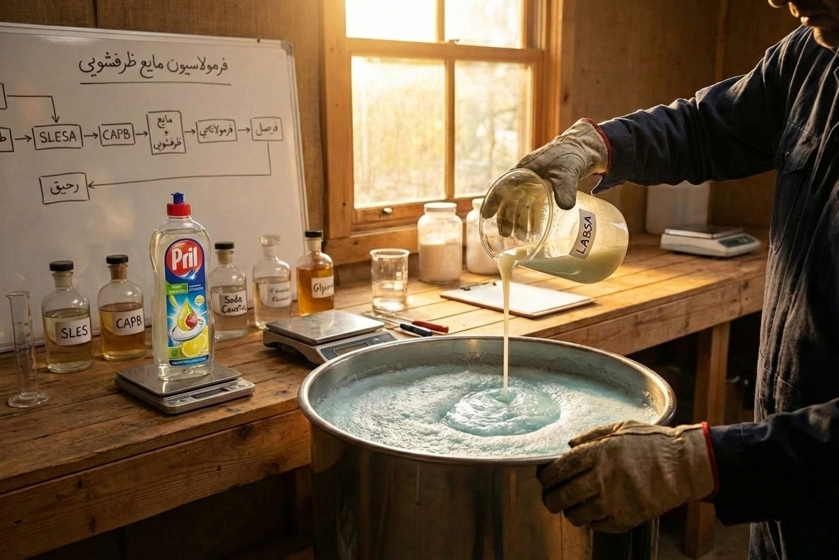
how to make dish washer
The materials needed to make the dishwashing liquid formulation are: linear alkylbenzene sulfonic acid (LABSA), sodium hydroxide (caustic soda), cocoamidopropyl betaine (CAPB), coconut diethanolamide (CDEA), sodium lauryl ether sulfate (SLES), Sodium Lauryl Sulfate (SLES), Propylene Glycol, Glycerin, Color, Fragrance and Water.
-
how to make hair shampoo
Do you want to produce shampoo for a specific type of hair? Oily hair, dry hair, dandruff, etc.? While essentially the same formula is required to produce all of the above products, you can add and modify specific ingredients for specific markets. The AustraLab program includes many shampoos, conditioners, styling aids and finished product formulas that you can tweak to create endless combinations. You can start your own profitable business as a private label hair care manufacturer or make conditioners and shampoos for your salon.
-
how to make toilet liquid
Commercial and economic grade liquid soap formulation The ingredients required to make the liquid toilet soap formulation are: water, sodium lauryl ether sulfate (70%), sodium lauryl sulfate, softener, foam enhancer, skin softener, vitamin E, glycerin acid, glycerin, glycerin, glycerin, Glycerin, glycerin and fatty acids, fragrance