Paraffin | Types and Production Methods
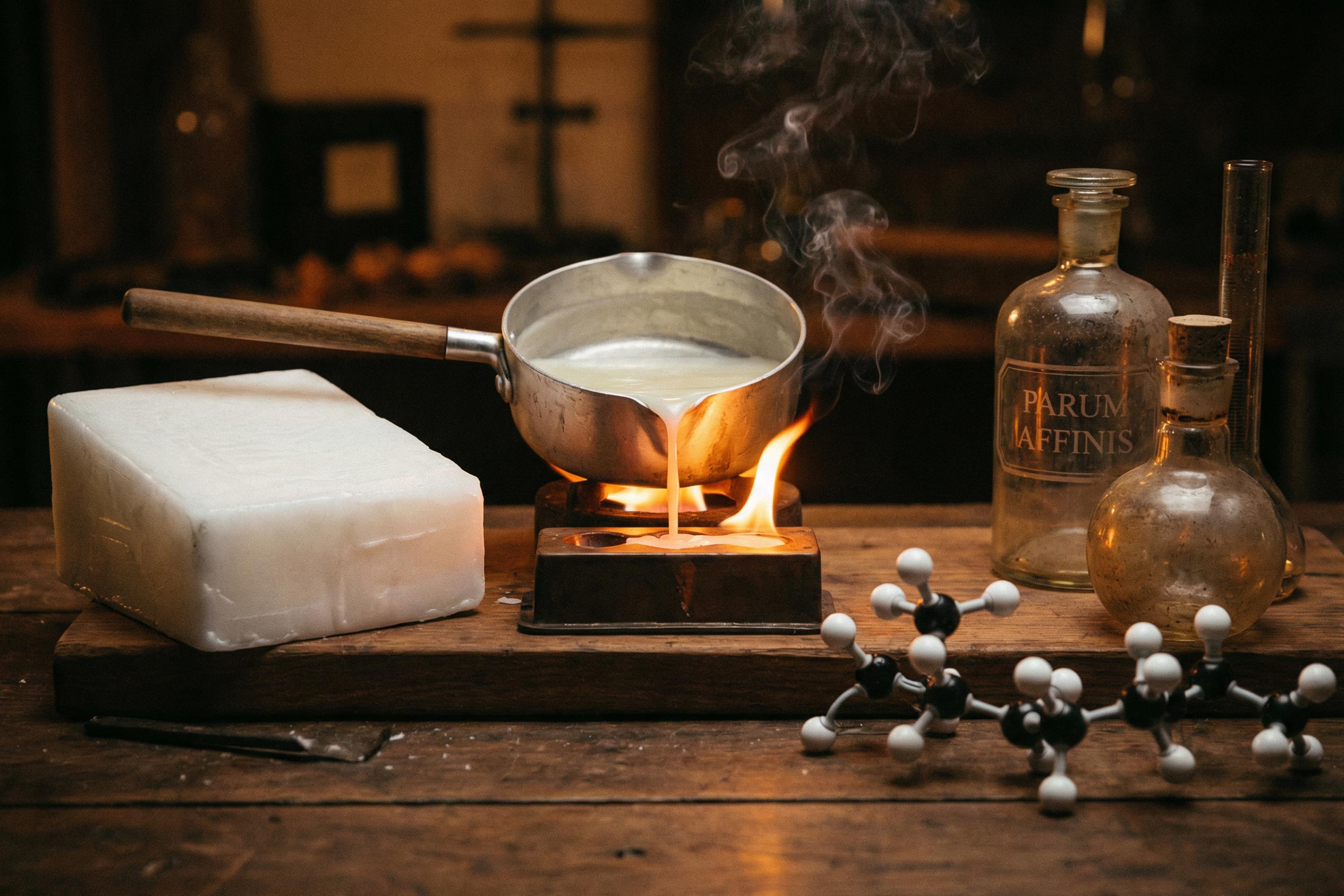
Paraffin is a saturated hydrocarbon from the alkane family with the general formula CnH2n+2. This compound consists of long carbon chains (typically 20 to 40 carbon atoms) and exists as a white, odorless solid at room temperature. The name "Paraffin" is derived from the Latin words Parum (little) and Affinis (affinity/tendency), referring to its low chemical reactivity.
Due to the single bonds between its carbon atoms, paraffin has a stable structure and controlled flammability. Its melting point ranges from 47∘C to 65∘C; it melts easily when heated and solidifies again upon cooling.
Paraffin is a versatile chemical used in various industries, including candle making, cosmetics, medicine, and the food industry. In this article, we explore the definition, applications, production methods, types, and safety considerations of paraffin.
What is Paraffin?
Paraffin is a saturated hydrocarbon from the alkane family (CnH2n+2). It is composed of long carbon chains and remains solid at room temperature. Its stable structure is a result of simple carbon-carbon bonds, and its low reactivity makes it highly durable for various industrial uses.
Applications of Paraffin
Paraffin is utilized in numerous industries for several reasons. Key applications include:
1- Candle Production: Due to its ideal melting point and easy moldability, it is the primary material for candles. Paraffin candles easily absorb colors and fragrances.
2- Cosmetics and Personal Care: Used in creams, lotions, and skincare products as an emollient and texture enhancer.
3- Medicine (Paraffin Therapy): In physiotherapy for heat therapy of joints, melted paraffin is applied to the skin to retain heat, increase blood flow, and reduce pain.
4- Food Industry: Used as a protective coating for fruits, cheeses, and chocolates to prevent moisture loss and oxidation.
5- Industry and Technology: * As electrical insulation in cables and equipment.
- In the production of lubricants and anti-corrosion materials.
- In manufacturing crayons, inks, and paints.
6- Textiles: Used to provide waterproofing properties to fabrics and papers.
Production Methods
Paraffin is primarily obtained through the refining of crude oil. The production steps are as follows:
- Crude Oil Distillation: In the distillation tower, crude oil is separated into various fractions like gasoline, naphtha, and diesel. Paraffin is extracted from heavier fractions.
- Purification and Hydrogenation: Impurities (such as sulfur and aromatic compounds) are removed using chemical processes like hydrogenation. This step makes the paraffin more stable.
- Crystallization: Raw paraffin is separated into solid crystals through controlled cooling. Remaining impurities are then removed using centrifuges or filtration.
- Bleaching: The paraffin may be treated with activated clay or acids to achieve a white, transparent appearance.
Types of Paraffin
Paraffin is categorized based on its molecular structure, purity level, and application:
- Solid Paraffin (Paraffin Wax): Long carbon chains (C20 to C40). Used in candle making, crayons, and cosmetics.
- Liquid Paraffin (Paraffin Oil): Shorter chains (C15 to C20). Used in cosmetics, industrial oils, and pharmaceuticals.
- Microcrystalline Wax: Features a fine crystalline structure with a higher melting point (65∘C to 90∘C). Used in rubber, adhesives, and protective coatings.
- Chlorinated Paraffin: Produced by adding chlorine to paraffin. It is resistant to water and oil, making it suitable for the textile and paper industries.
- Food-Grade Paraffin: Highly purified for use in coating fruits and chocolates.
Safety and Environmental Notes
- Flammability: Paraffin ignites at high temperatures; it must be kept away from heat sources.
- Skin Contact: Prolonged use may cause dryness or skin sensitivity.
- Biodegradability: Paraffin decomposes slowly in nature. Improper disposal can lead to environmental pollution.
- Medical Use: Paraffin therapy should be performed under professional supervision to prevent burns.
Paraffin vs. Natural Waxes
Paraffin is petroleum-based, whereas natural waxes (like beeswax) are extracted from plant or animal sources. While paraffin is more cost-effective and widely available, it may have lower heat resistance compared to some natural waxes.
Conclusion
Paraffin is a multi-purpose substance that plays a key role in various industries. From decorative candles to advanced medical and industrial applications, this chemical compound maintains its status due to its versatility and accessibility. However, it is essential to consider safety and environmental factors during its use.
-
Acetic Acid and the Role of Saba Shimi Mehr in Chemical Industries
Acetic acid (CH3COOH) is one of the most critical chemical compounds in the industry. Due to its unique properties, it is utilized across diverse sectors ranging from food production to pharmaceuticals. Known commonly as ethanoic acid, this weak acid is recognized as a fundamental building block in the synthesis of organic compounds. In Iran, leading companies such as Saba Shimi Mehr play a key role in meeting domestic industrial demands by focusing on the production and distribution of high-quality chemicals. By leveraging modern technologies, this company produces and supplies acetic acid in accordance with global standards.
-
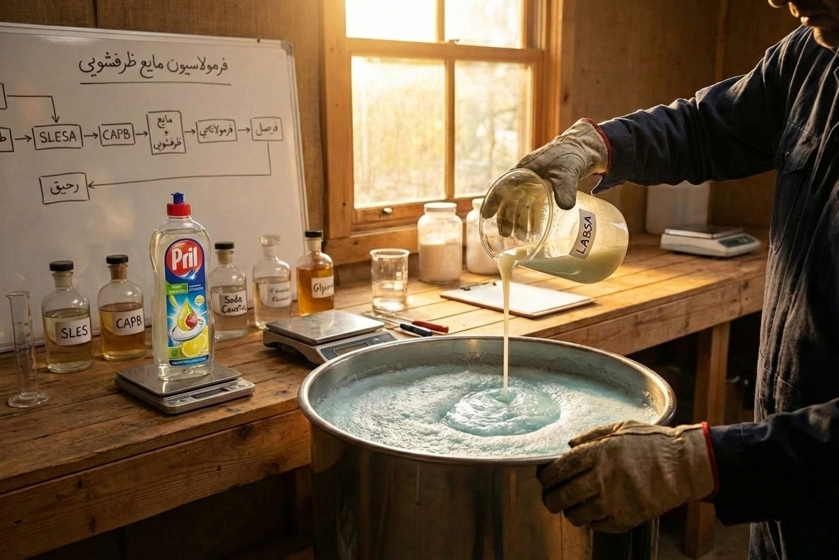
how to make dish washer
The materials needed to make the dishwashing liquid formulation are: linear alkylbenzene sulfonic acid (LABSA), sodium hydroxide (caustic soda), cocoamidopropyl betaine (CAPB), coconut diethanolamide (CDEA), sodium lauryl ether sulfate (SLES), Sodium Lauryl Sulfate (SLES), Propylene Glycol, Glycerin, Color, Fragrance and Water.
-
how to make hair shampoo
Do you want to produce shampoo for a specific type of hair? Oily hair, dry hair, dandruff, etc.? While essentially the same formula is required to produce all of the above products, you can add and modify specific ingredients for specific markets. The AustraLab program includes many shampoos, conditioners, styling aids and finished product formulas that you can tweak to create endless combinations. You can start your own profitable business as a private label hair care manufacturer or make conditioners and shampoos for your salon.
-
how to make toilet liquid
Commercial and economic grade liquid soap formulation The ingredients required to make the liquid toilet soap formulation are: water, sodium lauryl ether sulfate (70%), sodium lauryl sulfate, softener, foam enhancer, skin softener, vitamin E, glycerin acid, glycerin, glycerin, glycerin, Glycerin, glycerin and fatty acids, fragrance