Paraffin | Applications and Safety Considerations
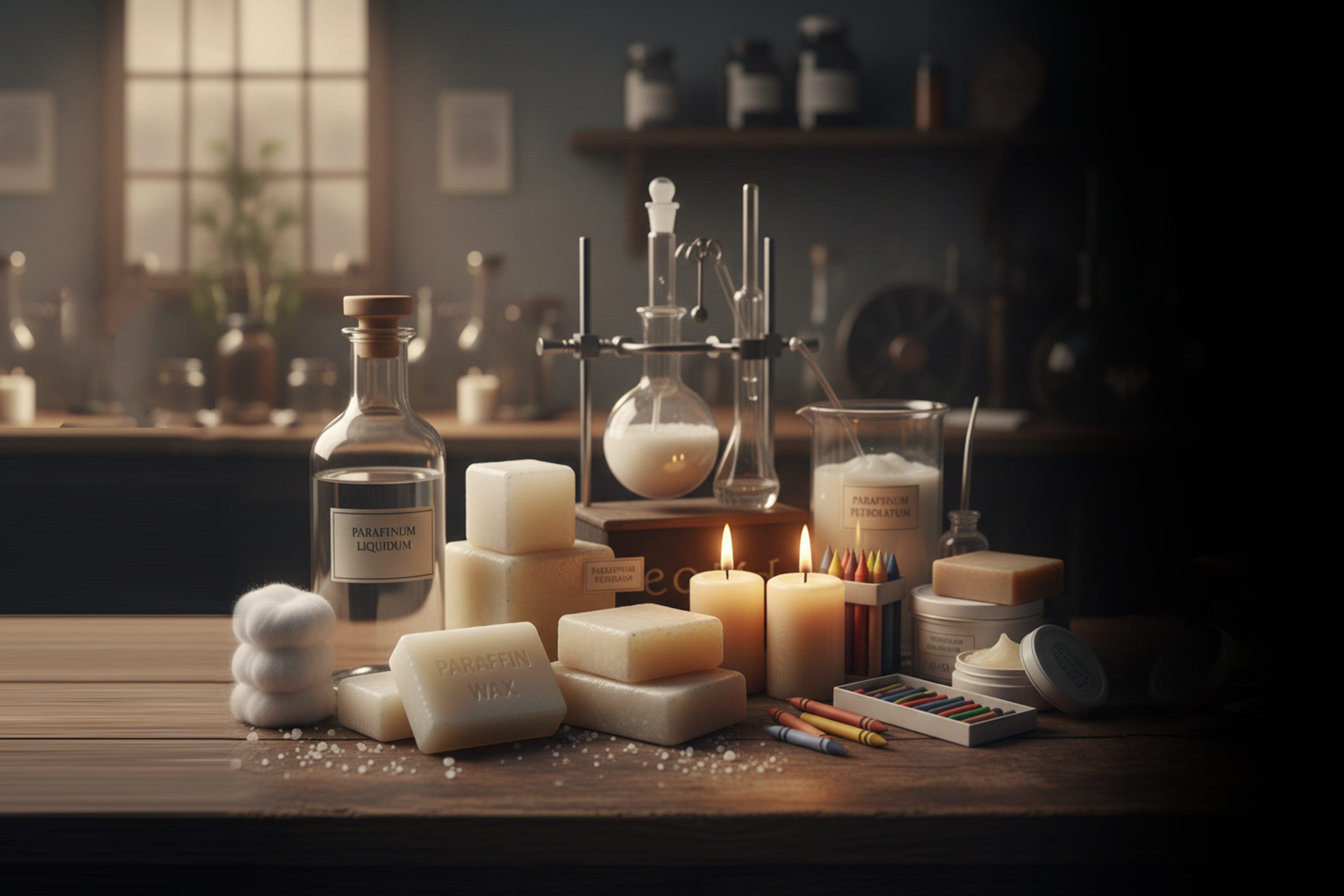
Paraffin is one of the most widely used chemical substances across various industries. Due to its unique properties, it is utilized in everything from medicine to household goods. Depending on the type and processing method, this hydrocarbon compound exists in several forms, including liquid paraffin, solid paraffin (wax), and petroleum paraffin. This article provides a comprehensive review of its properties, applications, benefits, potential risks, and the differences between its various types.
An Introduction to Paraffin
Paraffin belongs to the family of saturated hydrocarbons with the general chemical formula CnH2n+2. It is primarily extracted from crude oil or coal.
This substance exists as a solid (paraffin wax) or a liquid (paraffin oil) at room temperature. Because it is odorless, colorless, and non-toxic, it has gained widespread use in various sectors. The melting point of solid paraffin varies between 45∘C and 80∘C, making it ideal for candle production, electrical insulation, and cosmetic products.
Types of Paraffin and Their Characteristics
1- Solid Paraffin (Paraffin Wax)
- The most commonly recognized form of paraffin.
- Used in candle making, protective food coatings (such as cheese wax), cosmetic products (moisturizing creams), and the fashion industry (depilatory waxes).
- Purity levels vary by application; for instance, medical-grade paraffin must be highly refined and free of impurities.
2- Liquid Paraffin (Mineral Oil)
- A transparent, odorless mineral oil used in medical applications (as a laxative or skin emollient), the food industry (lubricant for food processing machinery), and cosmetics (lotions).
- In industrial settings, it serves as a cooling oil or an anti-foaming agent.
3- Chlorinated Paraffin
- Produced by adding chlorine to paraffin; it is used as a plasticizer in plastics, a flame retardant in paints, and an industrial lubricant.
- Due to potential toxicity, its use in consumer products is strictly regulated.
Remarkable Applications of Paraffin in Industry
1- Medical and Health Sector
- Paraffin Wax Therapy: Melted paraffin is used in physiotherapy to relieve joint pain in arthritis and to soften the skin.
- Oral Laxatives: Liquid paraffin helps treat constipation by creating a slippery layer in the intestines.
- Skin Protection: In products like petroleum jelly, paraffin acts as a barrier against moisture loss.
2- Food Industry
- Solid paraffin is used to coat the surface of cheeses, fruits (like apples), and chocolates to prevent drying and spoilage.
- It is also used in baking molds to prevent dough from sticking.
3- Energy Production
- Used as a clean fuel in emergency candles and camping heaters.
- In some regions, liquid paraffin is utilized as an alternative fuel for diesel engines.
4- Fashion and Beauty
- Used in the production of lipsticks, creams, and hair conditioners to provide shine and texture.
Advantages of Paraffin Over Alternatives
- Cost-Effective: Being a petroleum byproduct, it has low production costs.
- Safety: When properly refined, pure paraffin poses no health risks to humans.
- Versatility: Chemical processes can easily adjust its properties for specific industrial needs.
Risks and Safety Considerations
Despite its benefits, improper use of paraffin can pose certain risks:
- Flammability: Solid paraffin ignites easily. It must be stored away from open flames and heat sources.
- Poisoning: Ingesting liquid paraffin (especially by children) can lead to diarrhea, vomiting, or the absorption of toxins.
- Respiratory Issues: Inhaling smoke from low-quality paraffin candles can be harmful to the lungs.
- Environmental Impact: Paraffin is non-biodegradable, and its release into the environment can disrupt aquatic ecosystems.
- Warning: Using non-medical (industrial) paraffin in skincare or food-related products is extremely dangerous.
Paraffin vs. Natural Alternatives
With the rise of environmental awareness, several natural substitutes have gained popularity:
- Beeswax: Used in natural candles and high-end cosmetics.
- Soy Wax: Soy-based candles burn slower and produce significantly less soot.
- Plant Oils: Such as coconut oil, used as a natural alternative in cosmetics.
While these materials are often more expensive, they are biodegradable and environmentally friendly.
Conclusion
With over a century of history, paraffin remains a key material in modern industry. From lighting homes to improving skin health, this compound plays a vital role in daily life. However, awareness of its potential risks and a move toward sustainable alternatives are essential for personal and environmental well-being.


-
Acetic Acid and the Role of Saba Shimi Mehr in Chemical Industries
Acetic acid (CH3COOH) is one of the most critical chemical compounds in the industry. Due to its unique properties, it is utilized across diverse sectors ranging from food production to pharmaceuticals. Known commonly as ethanoic acid, this weak acid is recognized as a fundamental building block in the synthesis of organic compounds. In Iran, leading companies such as Saba Shimi Mehr play a key role in meeting domestic industrial demands by focusing on the production and distribution of high-quality chemicals. By leveraging modern technologies, this company produces and supplies acetic acid in accordance with global standards.
-
how to make dish washer
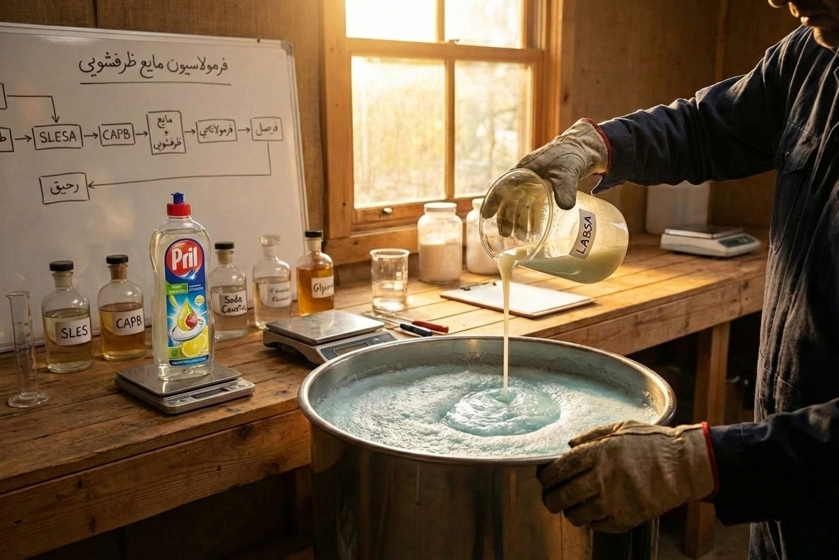
The materials needed to make the dishwashing liquid formulation are: linear alkylbenzene sulfonic acid (LABSA), sodium hydroxide (caustic soda), cocoamidopropyl betaine (CAPB), coconut diethanolamide (CDEA), sodium lauryl ether sulfate (SLES), Sodium Lauryl Sulfate (SLES), Propylene Glycol, Glycerin, Color, Fragrance and Water.
-
how to make hair shampoo
Do you want to produce shampoo for a specific type of hair? Oily hair, dry hair, dandruff, etc.? While essentially the same formula is required to produce all of the above products, you can add and modify specific ingredients for specific markets. The AustraLab program includes many shampoos, conditioners, styling aids and finished product formulas that you can tweak to create endless combinations. You can start your own profitable business as a private label hair care manufacturer or make conditioners and shampoos for your salon.
-
how to make toilet liquid
Commercial and economic grade liquid soap formulation The ingredients required to make the liquid toilet soap formulation are: water, sodium lauryl ether sulfate (70%), sodium lauryl sulfate, softener, foam enhancer, skin softener, vitamin E, glycerin acid, glycerin, glycerin, glycerin, Glycerin, glycerin and fatty acids, fragrance