Javel Water | Chemical Structure and Production
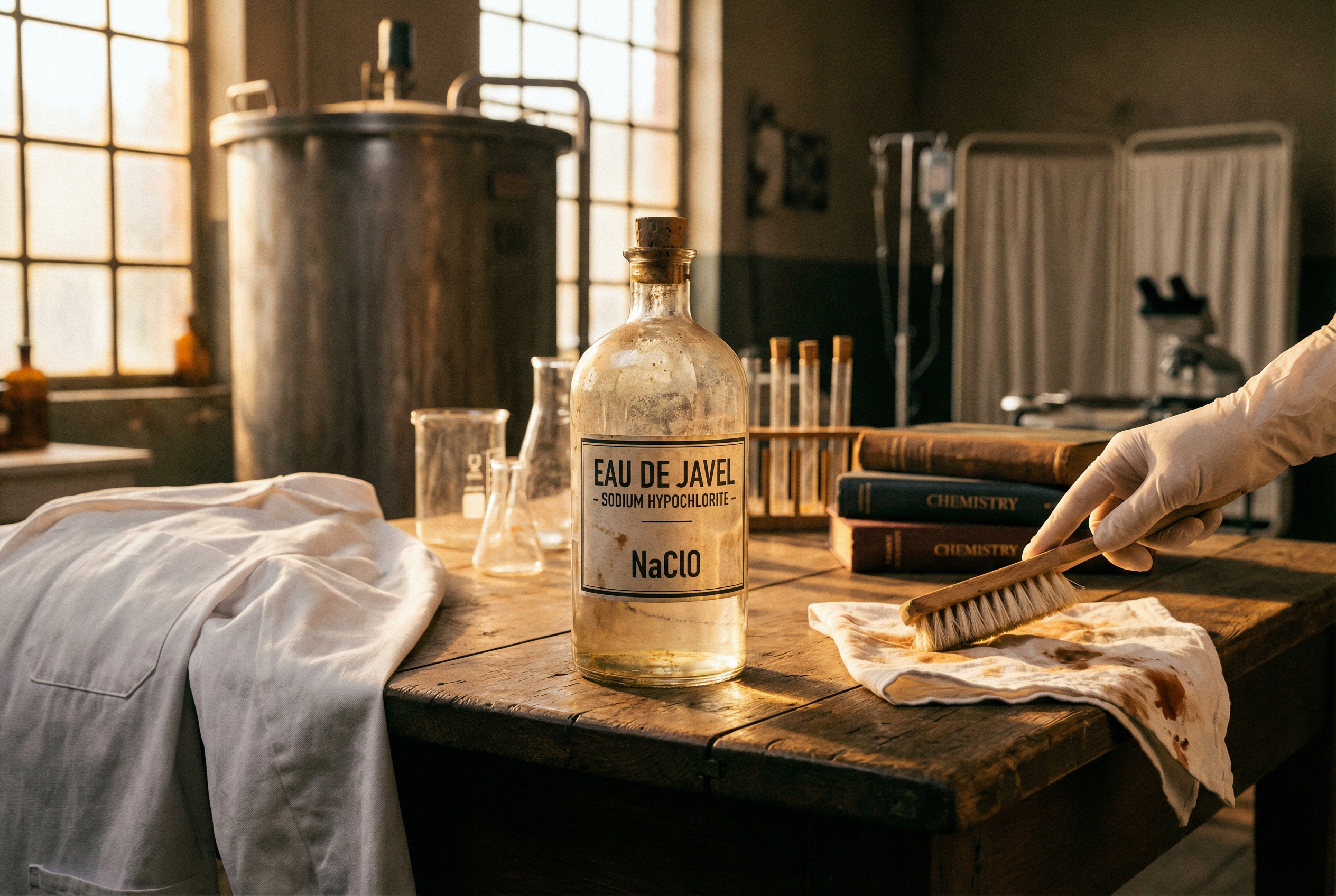
Javel water, also known as bleach or sodium hypochlorite (NaClO) solution, is one of the most important chemicals used in daily life and industry. Due to its powerful disinfectant and bleaching properties, it holds a significant place in household, medical, and industrial applications. This article explores the history, chemical structure, mechanism of action, applications, and safety tips regarding Javel water.
History and Discovery
Javel water was first discovered in 1789 by the French chemist Claude Louis Berthollet. While experimenting with chlorine gas (Cl2), he noticed that when the gas reacted with sodium hydroxide (NaOH), it produced a solution with potent bleaching properties. This discovery revolutionized the European textile industry, as bleaching fabrics had previously been a time-consuming and expensive process.
In the early 19th century, Javel water began to be used as a disinfectant in hospitals, playing a key role in reducing hospital-acquired infections. Today, this substance is available in various concentrations, typically ranging from 5% to 15%.
Chemical Structure and Production
Javel water is a solution of sodium hypochlorite (NaClO) in water. The chemical reaction for its production is as follows:
Cl2+2NaOH→NaClO+NaCl+H2O
In this reaction, chlorine gas combines with sodium hydroxide to produce sodium hypochlorite, sodium chloride (salt), and water. The strong oxidizing property of the hypochlorite ion (ClO−) is the primary factor behind its disinfecting and bleaching performance.
Mechanism of Disinfection
Hypochlorite works by attacking the cell walls of bacteria, viruses, and fungi, leading to the destruction of their proteins and nucleic acids. This process inactivates microorganisms within minutes. Additionally, its ability to break down pigments makes it an effective bleaching agent.
Applications of Javel Water
1- Disinfection of Surfaces and Water:
- Used in hospitals and homes to disinfect surfaces, bathrooms, and kitchens.
- Applied for disinfecting drinking water in emergency situations (e.g., after floods), though the concentration must be strictly controlled to remain safe for humans.
2- Bleaching:
- Used in the textile industry to bleach cotton and linen fabrics.
- Used in households to remove stains like coffee, tea, or mold from clothes and surfaces.
3- Paper and Pulp Industry:
- Used in the paper manufacturing process to bleach wood pulp.
- Environmental Cleanup
- Applied in industrial and municipal wastewater treatment to reduce microbial pollution.
4- Agriculture:
- Some farmers use diluted Javel water to disinfect soil and agricultural equipment.
Safety Tips and Potential Hazards
Despite its wide range of benefits, Javel water can be dangerous if used incorrectly:
- Skin and Eye Irritation: Direct contact with concentrated solutions causes chemical burns, itching, and inflammation. Always use gloves and protective goggles.
- Toxic Gases: Mixing Javel water with acids (such as hydrochloric acid/muriatic acid) or ammonia produces deadly gases like chlorine (Cl2) or chloramine (NH2Cl). These gases cause severe damage to the respiratory system.
- Surface Corrosion: Javel water can damage metals and sensitive fabrics. Avoid prolonged contact with metal surfaces.
- Explosion Risk: It is essential to store Javel water in closed containers away from light and heat, as its decomposition can lead to pressure buildup and potential explosion.
Comparison with Other Disinfectants
- Alcohol: 70% alcohol is effective for surfaces and skin but leaves no residual effect.
- Hydrogen Peroxide: It is safer but generally has less disinfecting power compared to Javel water.
- Benzalkonium Chloride: Often used for skin disinfection but is less effective against non-enveloped viruses (like Norovirus).
Proper Usage Instructions
- Always dilute Javel water with cold water (e.g., a ratio of 1 part bleach to 9 parts water for surface disinfection).
- After disinfecting, rinse the surfaces with clean water to remove any remaining hypochlorite residue.
- Never mix it with other cleaning agents.
Eco-friendly Alternatives
Due to concerns regarding the environmental impact of hypochlorite (such as the formation of organochlorine compounds), some "green" alternatives are suggested for specific uses, including white vinegar, baking soda, or ozone. However, these substances are generally not as powerful as Javel water.
Conclusion
Javel water is a versatile chemical that plays a vital role in public health and industry. However, awareness of its safe use and potential hazards is essential. By following scientific and safety principles, one can benefit from this substance without risking human health or the environment. Future research may focus on reducing its side effects and developing even more effective alternatives.
-
Acetic Acid and the Role of Saba Shimi Mehr in Chemical Industries
Acetic acid (CH3COOH) is one of the most critical chemical compounds in the industry. Due to its unique properties, it is utilized across diverse sectors ranging from food production to pharmaceuticals. Known commonly as ethanoic acid, this weak acid is recognized as a fundamental building block in the synthesis of organic compounds. In Iran, leading companies such as Saba Shimi Mehr play a key role in meeting domestic industrial demands by focusing on the production and distribution of high-quality chemicals. By leveraging modern technologies, this company produces and supplies acetic acid in accordance with global standards.
-
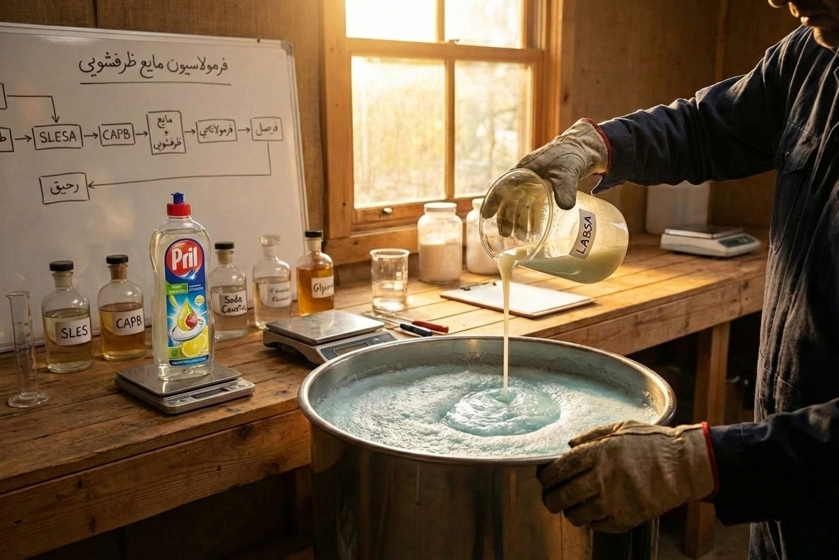
how to make dish washer
The materials needed to make the dishwashing liquid formulation are: linear alkylbenzene sulfonic acid (LABSA), sodium hydroxide (caustic soda), cocoamidopropyl betaine (CAPB), coconut diethanolamide (CDEA), sodium lauryl ether sulfate (SLES), Sodium Lauryl Sulfate (SLES), Propylene Glycol, Glycerin, Color, Fragrance and Water.
-
how to make hair shampoo
Do you want to produce shampoo for a specific type of hair? Oily hair, dry hair, dandruff, etc.? While essentially the same formula is required to produce all of the above products, you can add and modify specific ingredients for specific markets. The AustraLab program includes many shampoos, conditioners, styling aids and finished product formulas that you can tweak to create endless combinations. You can start your own profitable business as a private label hair care manufacturer or make conditioners and shampoos for your salon.
-
how to make toilet liquid
Commercial and economic grade liquid soap formulation The ingredients required to make the liquid toilet soap formulation are: water, sodium lauryl ether sulfate (70%), sodium lauryl sulfate, softener, foam enhancer, skin softener, vitamin E, glycerin acid, glycerin, glycerin, glycerin, Glycerin, glycerin and fatty acids, fragrance